← Medical library

Technology & treatment

HIPEC / heated intraperitoneal chemotherapy

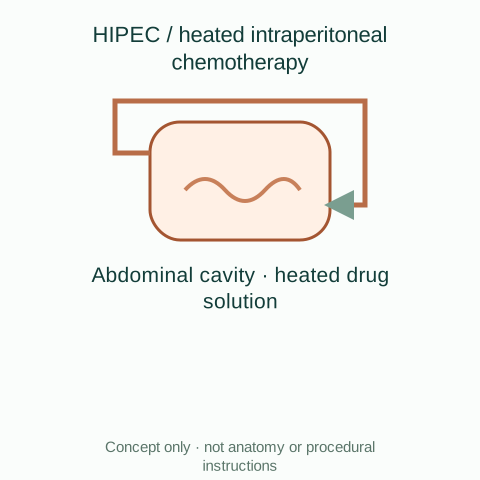
Principle diagram: HIPEC / heated intraperitoneal chemotherapy
Original BKC concept illustration; not a device photograph, anatomical image, or instructions for performing a procedure.
Principle & mechanism

HIPEC circulates heated anticancer-drug solution in the abdominal cavity, generally during surgery for selected patients with peritoneal disease.

What informs suitability

Assessment considers cancer type, peritoneal extent, feasibility of tumour removal, previous care, organ health, and nutrition. Evidence differs by disease.

Typical pathway

Cytoreductive surgery and HIPEC are distinct parts of a selected plan. Perfusion is followed by close monitoring and surgical recovery.

Risks & evidence limits

HIPEC is not routine intravenous chemotherapy or a replacement for all systemic treatment. Discuss infection, bowel leakage, renal effects, and major surgical complications.

Watch first. Understand more easily.

Original BKC explainers
24 seconds · silent text video

Radiation, ablation, surgery: what differs?

Read the video transcript
  1. Radiation targets a planned area. CyberKnife uses X-rays. It is not surgery with a blade.
  2. Ablation acts on a local target. RFA uses heat from radiofrequency energy. Risks and target location need assessment.
  3. Surgery describes a procedure. Procedure, access approach, and recovery are three different questions.
  4. Start with the care goal. Discuss options and combinations with a doctor, based on diagnosis and patient condition.
Explore the topic further →

Reading sources

Prepared by BKC editorial, 22 October 2026. General education, not a diagnosis or personal treatment selection. A topic listing does not establish availability at a particular hospital.

Connect the concepts

All topics →

SEE THEM SIDE BY SIDE

Different names. Understand how they work.

Compare principles, assessment, and evidence limits. A reading tool, not a way to select your treatment.

HIPEC / heated intraperitoneal chemotherapy

Abdominal cavity · heated medicines

Concept diagram: HIPEC / heated intraperitoneal chemotherapy
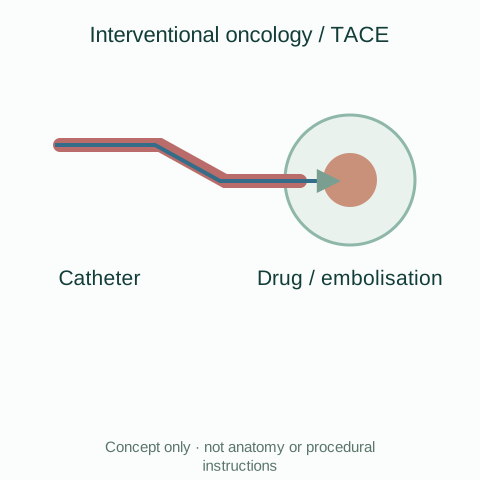
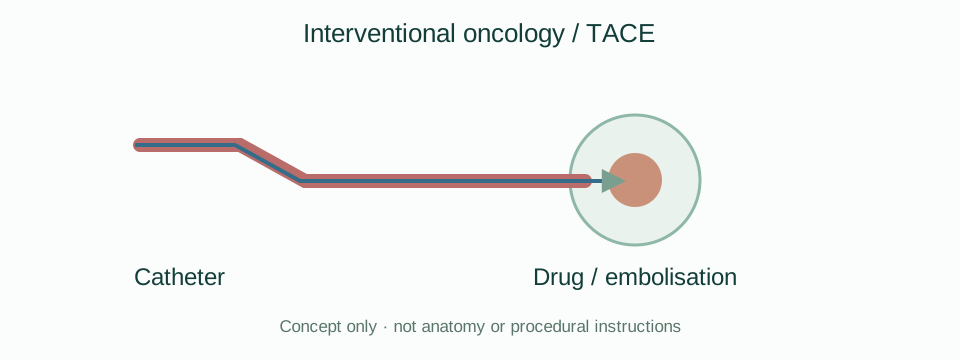
Interventional oncology / TACE

Vascular catheter · drug & embolisation

Concept diagram: Interventional oncology / TACE
Read principles, assessment, and risks
Concept comparison, without rankings or recommendations.
AspectHIPEC / heated intraperitoneal chemotherapyInterventional oncology / TACE
How it worksHIPEC circulates heated anticancer-drug solution in the abdominal cavity, generally during surgery for selected patients with peritoneal disease.Interventional oncology uses imaging to guide catheter or needle procedures. TACE delivers medicines and embolic material into tumour-supplying vessels in selected cases.
What is assessedAssessment considers cancer type, peritoneal extent, feasibility of tumour removal, previous care, organ health, and nutrition. Evidence differs by disease.Assessment considers vascular anatomy, tumour type and extent, organ function, clotting, and other therapies. Liver reserve is especially important for hepatic treatment.
Risks & limitsHIPEC is not routine intravenous chemotherapy or a replacement for all systemic treatment. Discuss infection, bowel leakage, renal effects, and major surgical complications.Pain, fever, organ dysfunction, bleeding, or non-target embolisation may occur. TACE, ablation, and systemic therapy are not interchangeable.

Schematics are conceptual. Technologies with different purposes are not necessarily alternatives. Open each topic for its sources and context.

Understand more? Bring your questions.

Doctors assess options from the case, beyond a technology name alone.

Start My Case