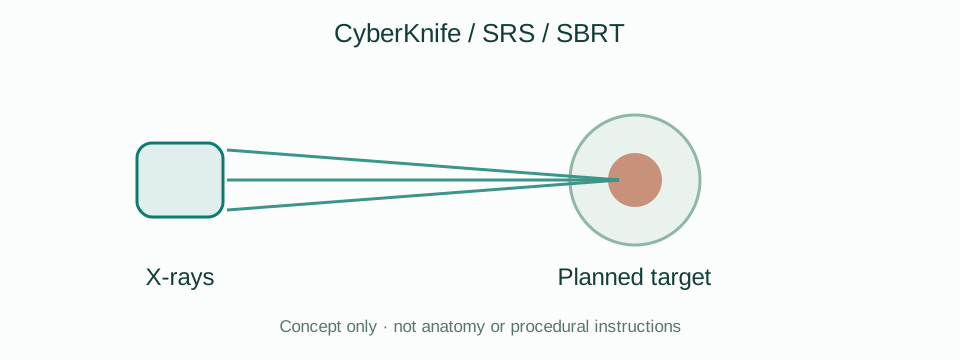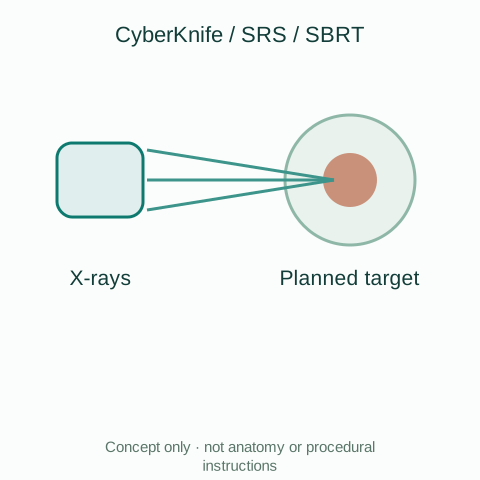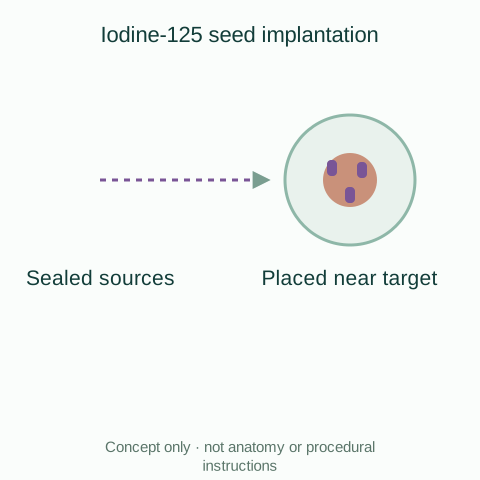
Original BKC concept illustration; not a device photograph, anatomical image, or instructions for performing a procedure.
01Principle & mechanism
I-125 seed implantation is brachytherapy: sealed radioactive sources are placed within or near target tissue. Radiation comes from implanted sources, not external beams.
02What informs suitability
Suitability depends on organ, tumour type, access, spread, and dose planning. Prior treatment and radiation-protection needs require review.
03Typical pathway
Imaging and dose planning precede guided seed placement. The team then checks dose distribution and provides follow-up and safety instructions.
04Risks & evidence limits
Bleeding, infection, source migration, or nearby-tissue injury can occur. Family precautions depend on source and site, not instructions copied from another procedure.
Watch first. Understand more easily.
Original BKC explainers
24 seconds · silent text video
Radiation, ablation, surgery: what differs?
Read the video transcript
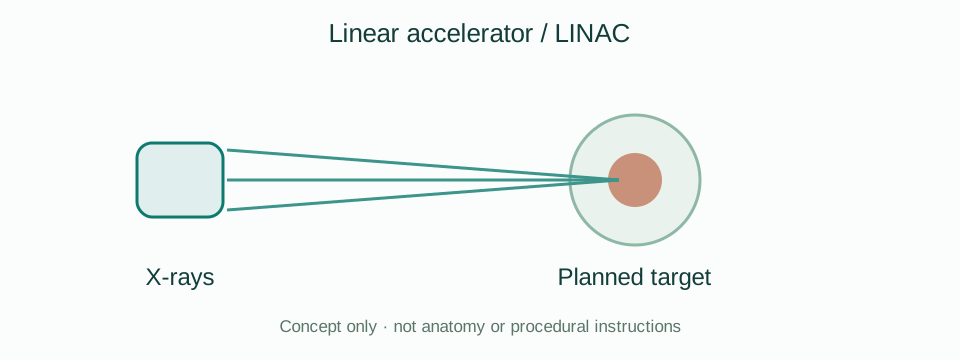
Radiation targets a planned area. CyberKnife uses X-rays. It is not surgery with a blade.
Ablation acts on a local target. RFA uses heat from radiofrequency energy. Risks and target location need assessment.
Surgery describes a procedure. Procedure, access approach, and recovery are three different questions.
Start with the care goal. Discuss options and combinations with a doctor, based on diagnosis and patient condition.
Prepared by BKC editorial, 22 October 2026. General education, not a diagnosis or personal treatment selection. A topic listing does not establish availability at a particular hospital.
Concept comparison, without rankings or recommendations.
Aspect
Iodine-125 seed implantation
CyberKnife / SRS / SBRT
How it works
I-125 seed implantation is brachytherapy: sealed radioactive sources are placed within or near target tissue. Radiation comes from implanted sources, not external beams.
CyberKnife is an image-guided robotic stereotactic radiotherapy system. SRS and SBRT describe focused radiation approaches; radiosurgery does not mean cutting surgery.
What is assessed
Suitability depends on organ, tumour type, access, spread, and dose planning. Prior treatment and radiation-protection needs require review.
Size, location, target motion, nearby sensitive organs, and previous radiation affect planning. Large doses per fraction do not suit every tumour.
Risks & limits
Bleeding, infection, source migration, or nearby-tissue injury can occur. Family precautions depend on source and site, not instructions copied from another procedure.
Radiation can affect healthy tissue. Side effects depend on site and dose; follow-up images and size changes require clinical interpretation.
WhatsApp opens a draft only; no message is sent or Case created. If WhatsApp is unavailable, use Start Case. For emergencies, contact local emergency services.